I finally got around to reading the lovely diacritical mark article that our friend, Mr. David Březina wrote for i love typography! I don't know much about Arabic, but it definitely made me want to take another look at the decorative calligraphic work in which the *vocalization* marks are more obviously essential elements of the composition. After a very very quick Google search, I found this nice overview of the history of Arabic type evolution that looks promising. Hopefully it will help me dig further! Thank you, Pascal Zoghbi!
Showing posts with label history. Show all posts
Showing posts with label history. Show all posts
Wednesday, February 25, 2009
Diacritical / vocalization marks and Arabic
I finally got around to reading the lovely diacritical mark article that our friend, Mr. David Březina wrote for i love typography! I don't know much about Arabic, but it definitely made me want to take another look at the decorative calligraphic work in which the *vocalization* marks are more obviously essential elements of the composition. After a very very quick Google search, I found this nice overview of the history of Arabic type evolution that looks promising. Hopefully it will help me dig further! Thank you, Pascal Zoghbi!

Monday, May 26, 2008
Postage of the British Raj
 I tracked this seal down - and found a wealth of beautiful images. Check out the Royal Philatelic Society's page on the history of postage in the Jammu and Kashmir states of the British Raj. Geoffrey Hack's collection from the Princely States of India is also incredible! All sorts of beautiful old handwriting, seals, stamps, and printed type!
Monday, March 24, 2008
An Approach to Type Design and P.K. Ghosh

An Approach to Type Design and Text Composition in Indian Scripts, by P.K. Ghosh - an amazing document, available in .pdf format. Answers a lot of questions about the history of Devanagari printing, the formation of the letterforms, and the future of font development. Also, you can see on the right, additional examples of how northern scripts were derived from flat-tipped pens, and the southern scripts derived from pointed/round-tipped pens.
Thursday, March 13, 2008
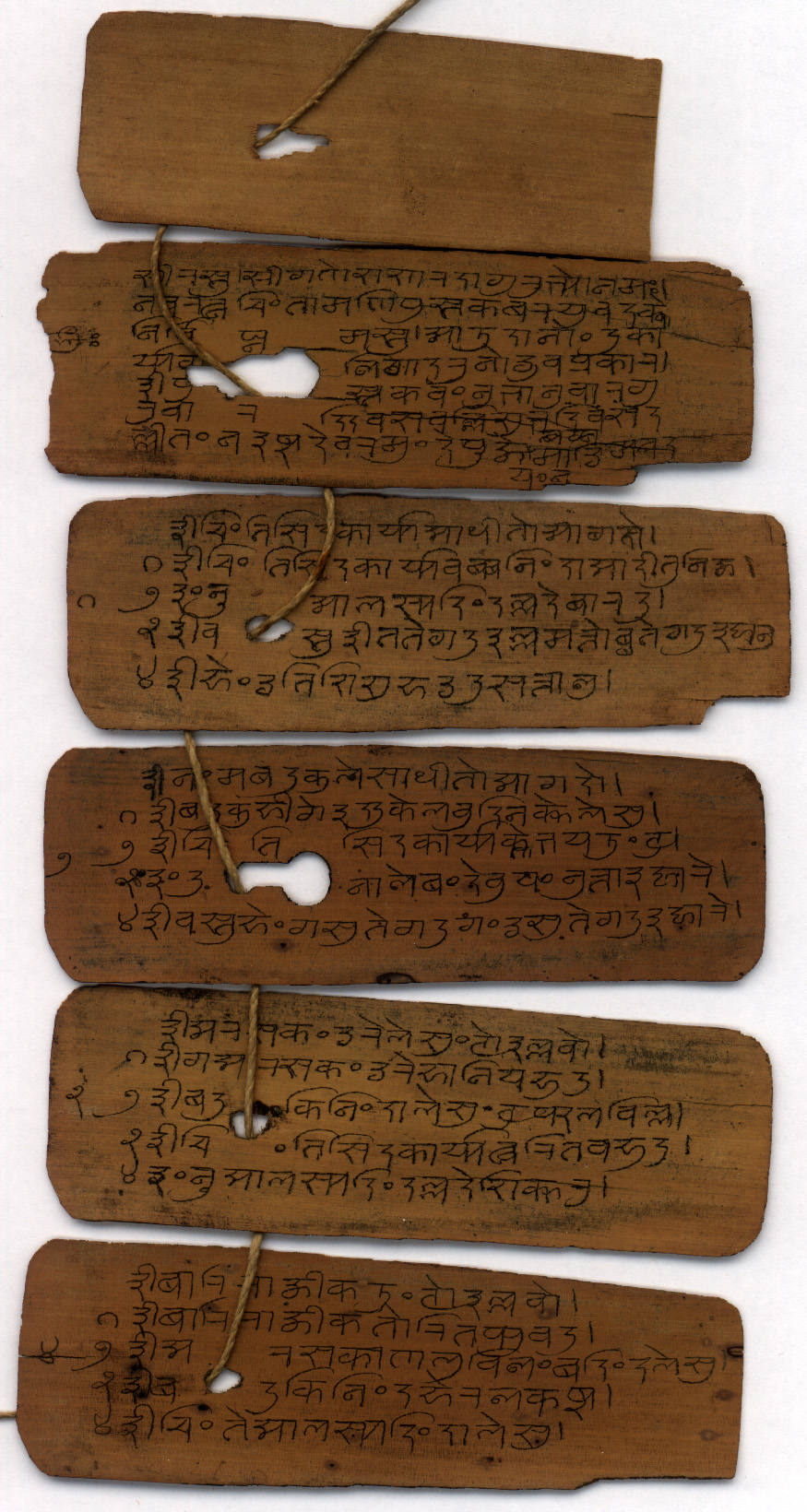
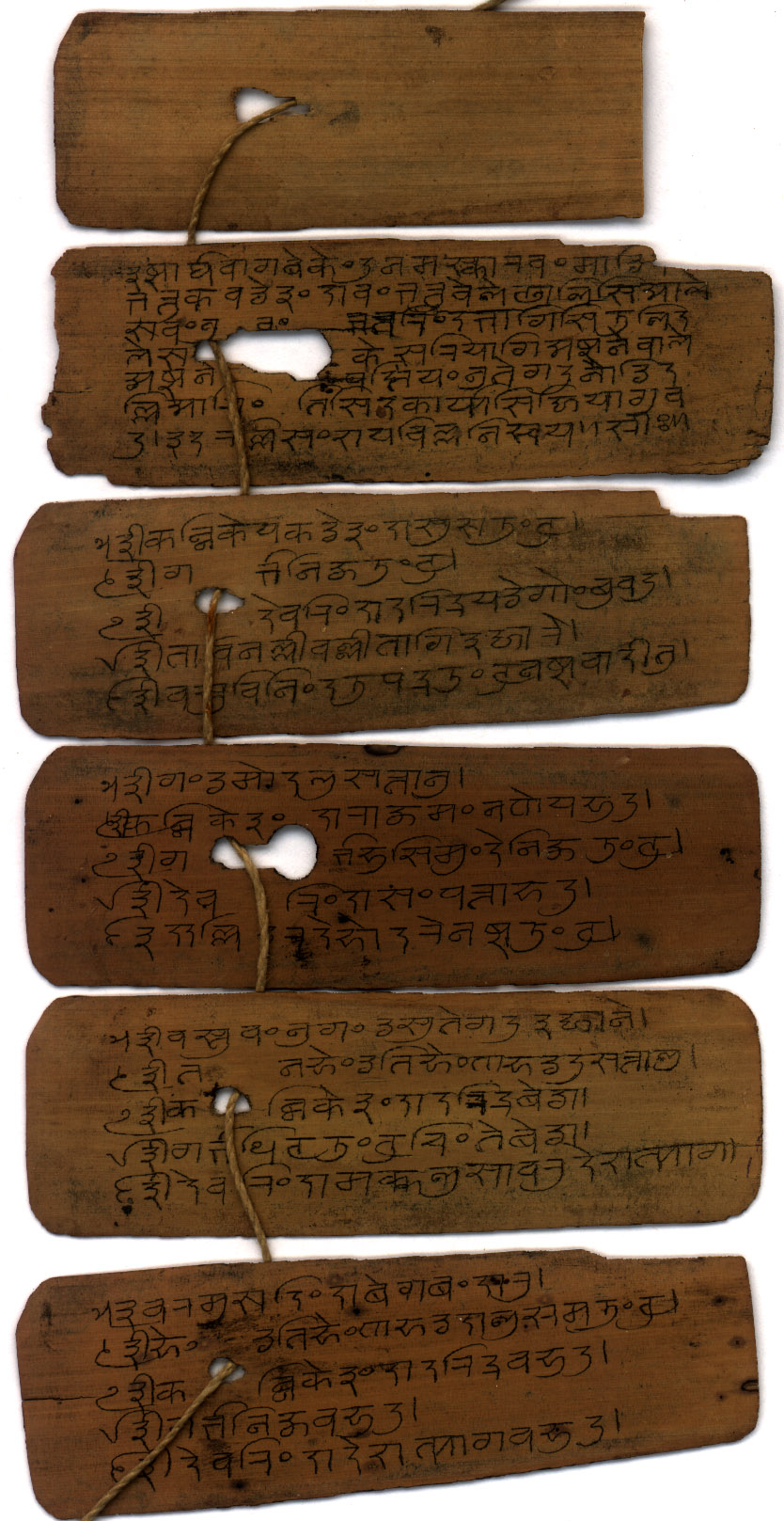
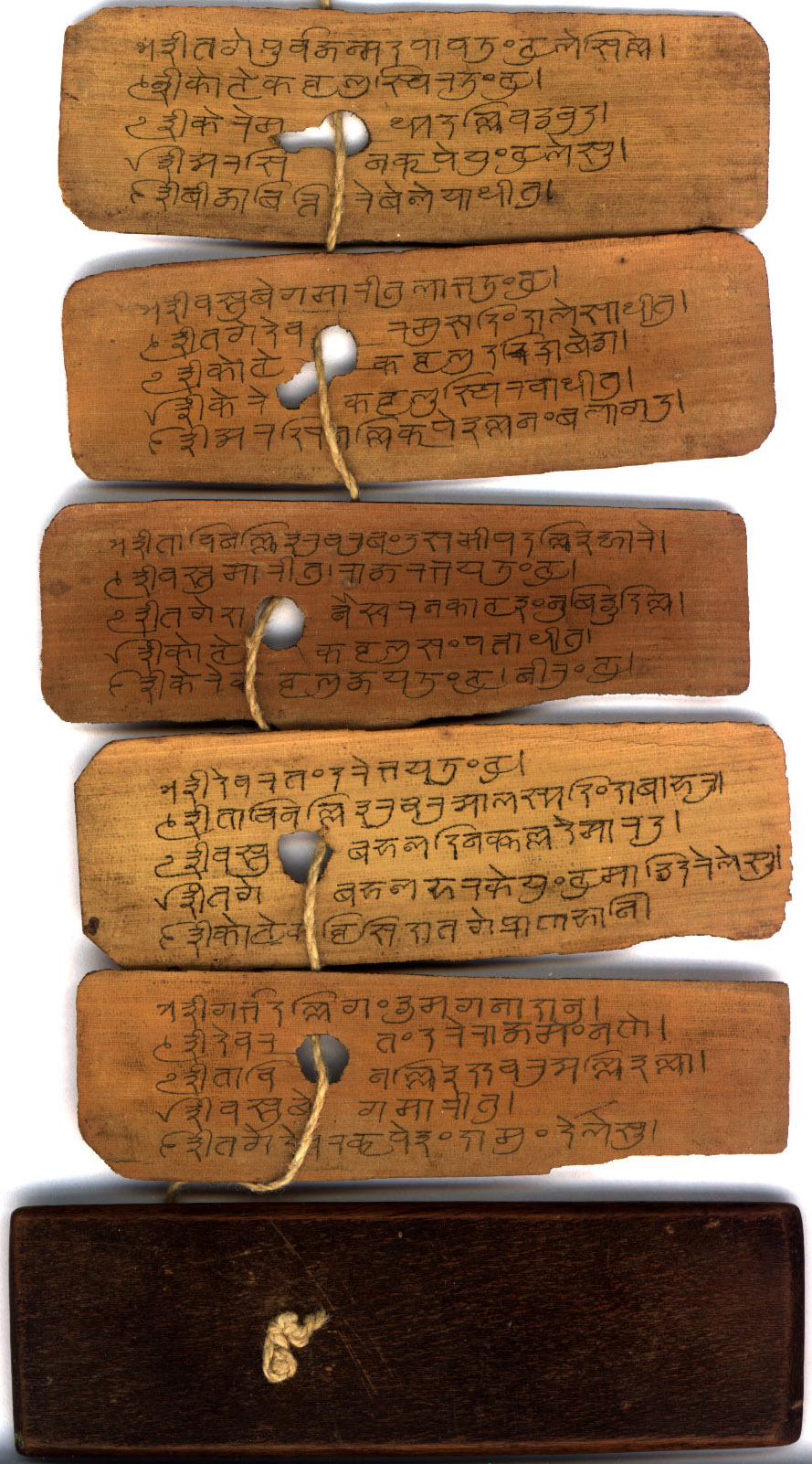
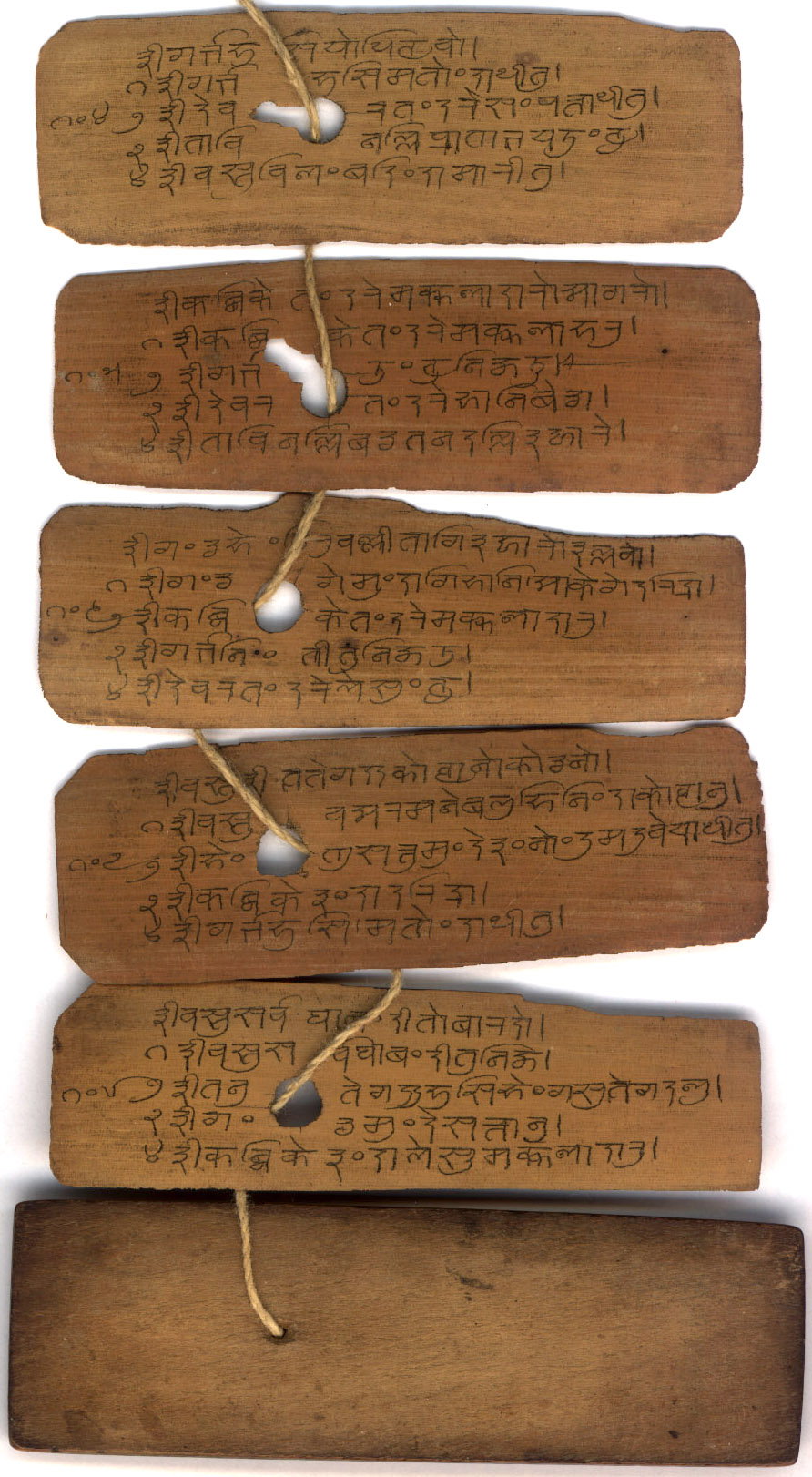
Hindi palm leaf manuscript

Wednesday, March 12, 2008
Evolution of Bengali script
 "The modern script was formalized in 1778 when it was first typeset by Charles Wilkins. ...
 Clusters of consonants are represented by different and sometimes quite irregular characters; thus, learning to read the script is complicated by the sheer size of the full set of characters and character combinations, numbering about 500. While efforts at standardizing the script for the Bengali language continue in such notable centers as the Bangla Academies (unaffiliated) at Dhaka (Bangladesh) and Kolkata (West Bengal, India), it is still not quite uniform as yet, as many people continue to use various archaic forms of letters, resulting in concurrent forms for the same sounds. Among the various regional variations within this script, only the Assamese and Bengali variations exist today in the formalized system.
It seems likely that the standardization of the script will be greatly influenced by the need to typeset it on computers. The large alphabet can be represented, with a great deal of ingenuity, within the ASCII character set, omitting certain irregular conjuncts. Work has been underway since around 2001 to develop Unicode fonts, and it seems likely that it will split into two variants, traditional and modern." - Wikipedia article on Bengali Script
The image above and some more info are located here.
Saturday, March 1, 2008
Evolution from Brahmi

I'm finally getting more serious about making my South Asian type dreams come true! So that means, in addition to just collecting interesting typography examples, I'll start posting more research/history/informative entries. Hopefully they'll help someone else out there!
In studying Latin-based typography, it was SO helpful to learn the full evolution of writing systems, and the variants in environment, geography, culture, language, and technology that determine why letterforms from different cultures look the way they do. So now I'm on a quest to thoroughly research the history of South Asian writing - I'm not expecting that I'll be able to make posts in historical chronological order, but I'll at least try to get more and more in-depth, so it'll be worth it! Let's crack open the internet and see what I can find! (Hopefully there will be plenty written in English!)
Anyway, above are two diagrams showing the basic evolution of different scripts, all originating from Brahmi. The left image shows South Asian scripts, the diagram on the right shows South-East Asian scripts, which evolved from the 6th century Southern deviation. Found on Colorado State's Languages and Scripts of India page.
Thursday, February 7, 2008

Subscribe to:
Posts (Atom)